Is chicken tikka masala British or Indian?
Both, in a way. It builds on Indian dishes such as chicken tikka and butter chicken, but in its familiar form it is widely seen as a British curry-house creation.
The surprising stories behind the British curry house’s favourite dishes.
The curry-house menu is one of Britain’s great food traditions. Some of its dishes go back to Mughal kitchens, some to Portuguese Goa, and a few were invented in Britain. Here is what the names mean.
Korma comes from the Mughal courts of northern India, where meat was gently braised in yoghurt or cream with nuts and aromatic spices. The British curry-house korma is the mildest dish on most menus. Ours is made with cream, almonds and coconut. Pasanda is its close cousin: the name refers to the prime cuts once reserved for the court, and today it means a mild, creamy curry with almonds and cashews.
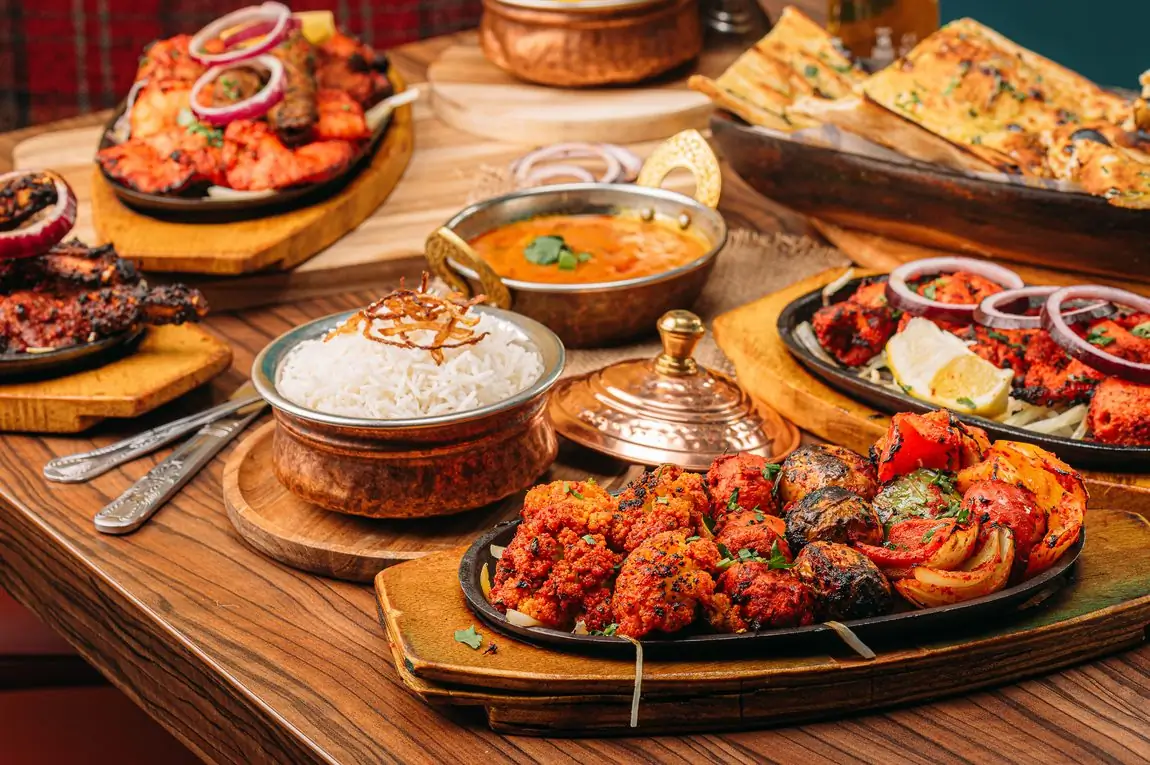
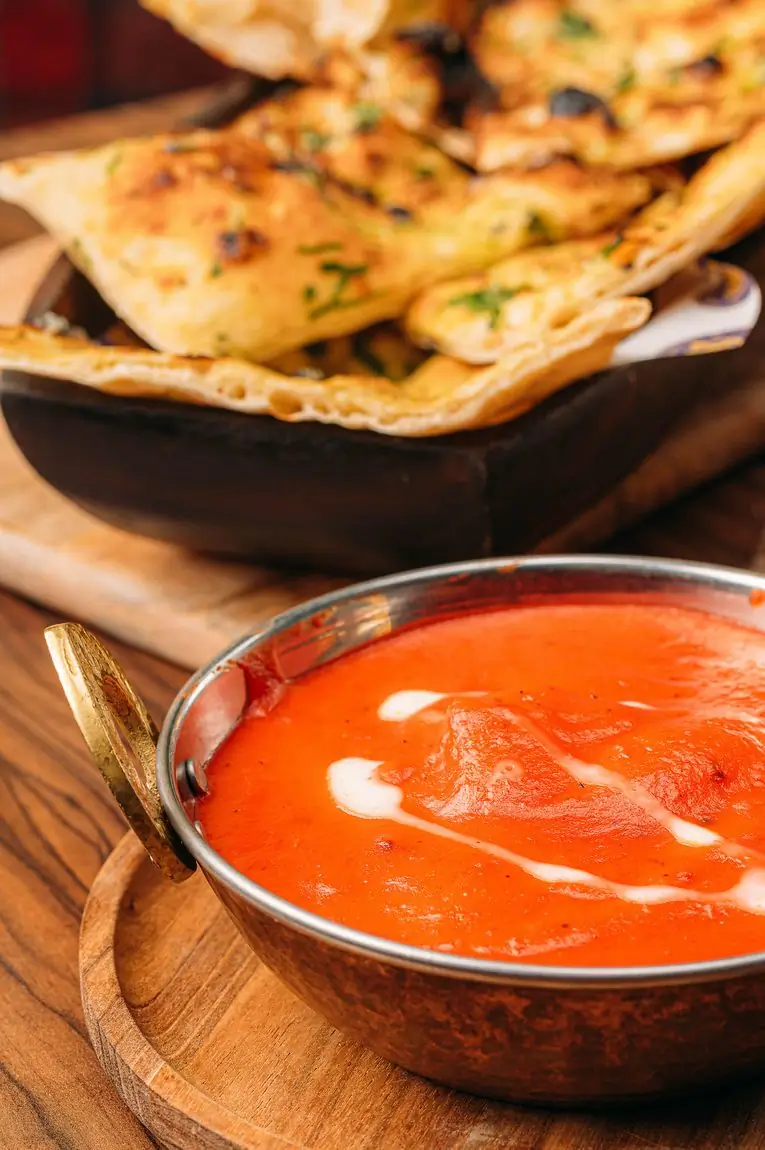
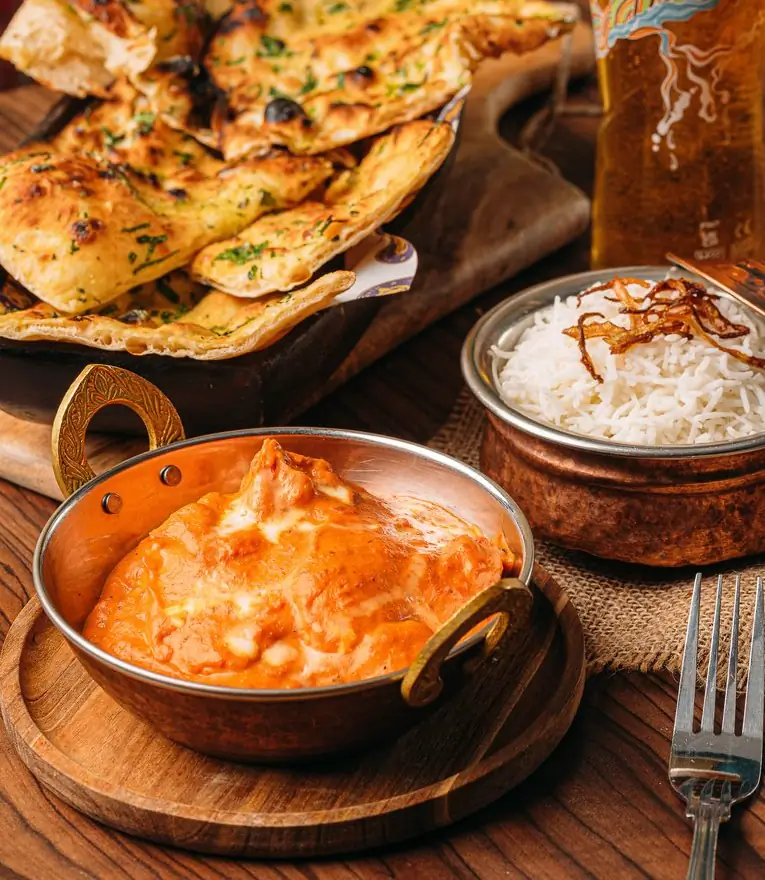
Chicken tikka in a creamy, spiced tomato sauce is so popular in Britain that a foreign secretary once called it a true British national dish. Its origin is disputed: one well-known story credits a Glasgow restaurant in the 1970s, while others point to earlier butter-chicken recipes from Delhi. Either way, it is a curry-house original. It starts with chicken tikka, boneless pieces marinated in yoghurt and spices and cooked in the tandoor, which is then simmered in the sauce, so the smoky flavour of the clay oven runs through the whole dish.
Balti is usually credited to Birmingham in the 1970s, where cooks with roots in Pakistan and Kashmir cooked curries quickly over a high flame and served them in the same thin steel bowl. Balti means bucket in Hindi and Urdu, a nod to that bowl.
Jalfrezi is thought to date from the days of British India, when leftover meat was stir-fried with chillies and onions. Today it is cooked fresh, with green chillies, onions, peppers and tomatoes, and it is one of the most popular hot curries in the UK.
Madras is named after the city now called Chennai, but it is really a curry-house heat level: a rich, fiery tomato-based curry rather than a traditional local dish. Vindaloo comes from Goa, where Portuguese settlers cooked meat with wine vinegar and garlic, carne de vinha d’alhos. In Britain it became the byword for a very hot curry.
Rogan josh comes from Kashmir and has Persian roots: a red, aromatic curry of medium strength. Bhuna describes a cooking method, frying the spices slowly until the sauce is thick and intense. Dupiaza (do pyaza) means “two onions”, because onions are added twice, once cooked down and once later in the pan.
Both come from the Parsi community of western India. Dhansak combines meat with lentils for a sweet, sour and gently hot flavour, and pathiya is a fairly hot sweet and sour curry with tomatoes and fresh herbs.
Three more names describe how a curry is made rather than where it comes from: saagwala is cooked with spinach, achari uses the spices of Indian pickles, and kadai (karahi) is named after the wok-like pan it is cooked in.
Every one of these classics is on our menu, cooked fresh to order in Birchwood, Lincoln. If you want to compare them by heat, see our guide to curry heat, or try something different with our Nepalese signature dishes.
Good to know
Both, in a way. It builds on Indian dishes such as chicken tikka and butter chicken, but in its familiar form it is widely seen as a British curry-house creation.
Balti means bucket in Hindi and Urdu, after the steel bowl the curry is cooked and served in.
Korma, tikka masala, pasanda, curry, bhuna, rogan josh, balti, dupiaza, dhansak, saagwala, achari, kadai, jalfrezi, pathiya, madras and vindaloo.
Delivery or collection from Birchwood, Lincoln. Tuesday to Sunday from 4:30pm.
Unit 8, Birchwood Shopping Centre, Jasmin Road, Lincoln, Lincolnshire, LN6 0QB